Non-invasive bio-photonic systems designed to support healing, tissue regeneration, and improved quality of life across multiple medical and veterinary applications.
MEDICAL APPLICATIONS
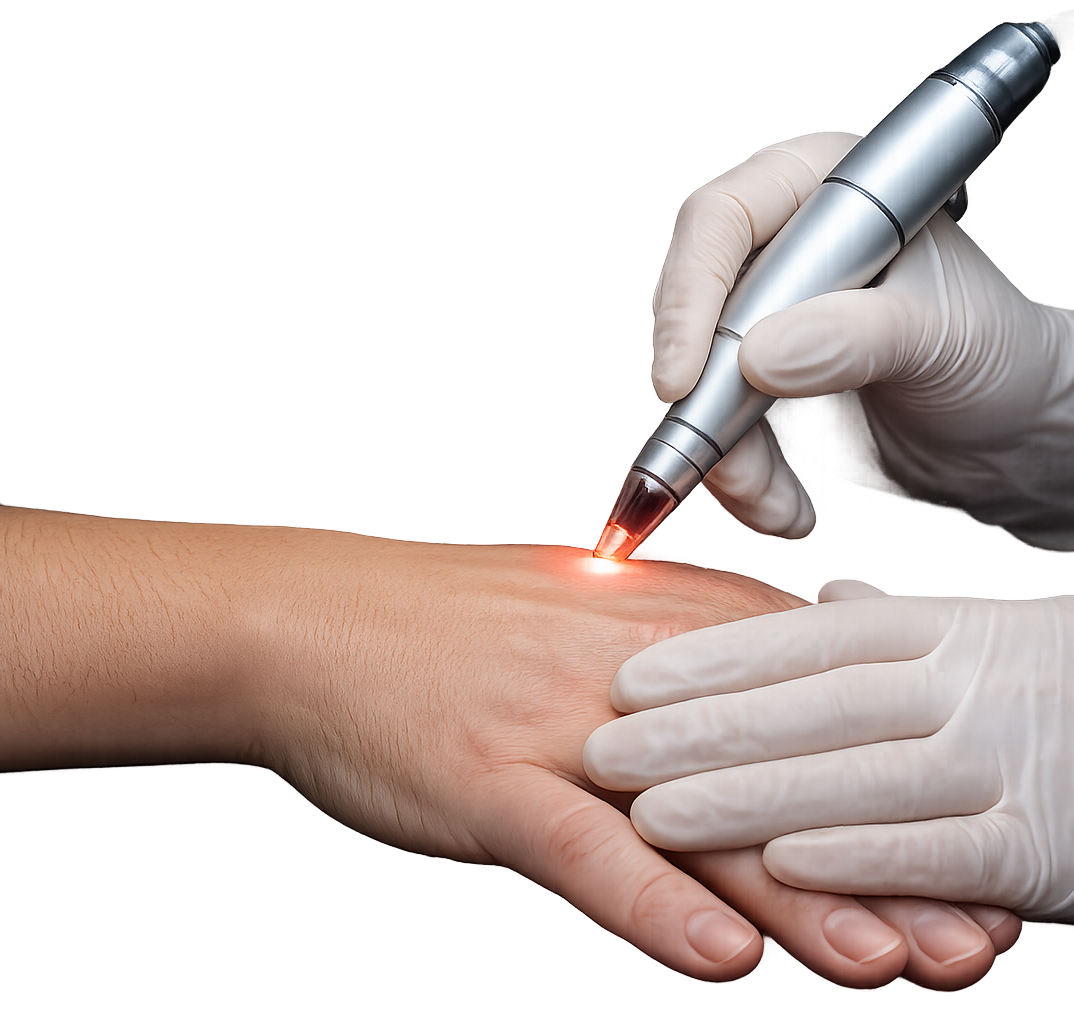
Lazar Company supports ophthalmology, neurotherapy, dentistry, physiotherapy, cardiovascular health, and burn recovery. Clinically studied and professionally applied across human medical specialties.
Explore Medical Applications →VETERINARY APPLICATIONS
Used across horses, camels, sheep, cattle, falcons, and companion animals. Supports wound healing, performance enhancement, immune function, and disease management.
Explore Veterinary Applications →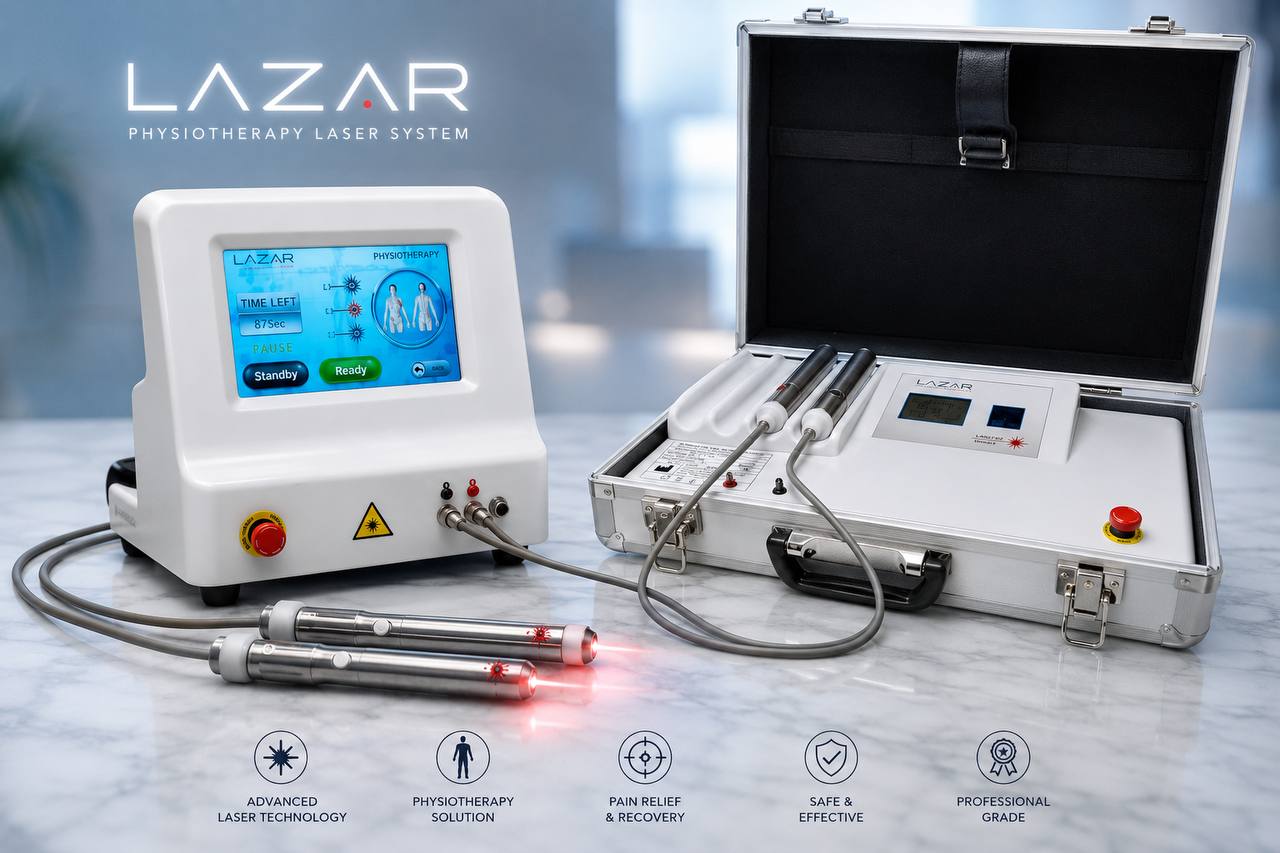
ABOUT Lazar Company
Lazar Company is built on the principle of tissue response technology — focusing not only on treating disease, but on restoring the body's tissues and vital systems to their natural functional range.
The health of tissues and organs — in both humans and animals — depends on proper blood circulation, adequate oxygenation, cellular nutrition, and physiological balance. When these conditions are optimal, cells have greater capacity to perform their natural functions, resist damage, and maintain biological stability.
The body is viewed as an integrated system: the proper function of each tissue and organ directly affects the efficiency of the whole. Lazar Company aims to improve the physiological foundation that activates the body's own innate capacity to heal, regulate, and recover.
Lazar Company is a supportive health technology. It works alongside — not instead of — established medical care, vaccination, hygiene, and nutrition.
MECHANISMS OF ACTION
Lazar Company operates through three primary biological pathways that together move tissues toward regeneration, natural regulation, and sustained healthy function.
Increases local energy at the cellular and tissue level — improving local blood circulation, increasing oxygenation, enhancing material exchange, and supporting normal cell function.
Especially important in hard tissues and skeletal structures. Can stimulate regeneration processes and regulate bone and tissue structures — supporting recovery from skeletal injuries and fractures.
Activates natural biochemical pathways to strengthen repair and regulatory processes in cells and tissues — creating the foundation for a stronger, more coordinated body response.
Body Systems Supported
When cells and tissues have adequate oxygen and blood supply, the body's defensive, regulatory, and repair processes operate with greater efficiency. Lazar Company supports natural immune function by improving microcirculation and cellular metabolism — creating more suitable physiological conditions for the body's own systems to perform at their best.
APPLICATIONS
Lazar Company technology is applied across multiple human medical and veterinary fields — a single platform supporting healing, regeneration, and performance at every level.
Supportive therapy for glaucoma, corneal disorders, retinal conditions, and improved visual function.
Learn more →
Documented results in severe burn treatment — reduced scarring, accelerated healing, natural skin regeneration.
Learn more →
Supports neural regeneration, brain and spinal recovery, and neurological rehabilitation.
Learn more →
Used at Al-Jiyad Stables for wound healing, laminitis, joint pain, and pre-competition performance support.
Learn more →
Treats respiratory infections, mastitis, and muscle pain — a scar-free alternative to traditional branding.
Learn more →
Enhances wool quality, treats foot rot and skin ulcers, and can increase milk and meat production by 1.5–2×.
Learn more →WHY CHOOSE Lazar Company?
Bio-photonic laser therapy delivers better outcomes without the drawbacks of conventional treatments.
Visible Results in Burn Treatment
Positive Response Rate in Glaucoma Study
Increase in Livestock Production
Mastitis Morbidity Rate in UAE Camels
CLINICAL EVIDENCE
Lazar Company technology is backed by published research and documented clinical cases across human and veterinary applications.
A pilot study on 12 glaucomatous eyes demonstrated statistically significant improvement in visual field measurements and potential neuroprotective effects.
A patient with severe palm and finger burns showed significant healing in two weeks — reduced inflammation, natural skin regeneration, and prevention of hypertrophic scarring.
Three documented horse cases at Al-Jiyad Stables showed full wound healing, pain elimination, and improved competition performance after just 4 treatment sessions.
WHAT THEY SAY
WHY Lazar Company?
Focuses on restoring tissues and vital systems to their natural functional range — not just treating symptoms. The body's own capacity to heal and regulate is activated at the source.
No surgery, no incisions, no scarring. Safe and painless for humans and animals alike — suitable for use across medical, veterinary, and rehabilitation settings.
Acts through photophysical, photoelectric, and photochemical mechanisms simultaneously — improving circulation, oxygenation, and biochemical repair at both soft tissue and skeletal levels.
Improves conditions for the nervous, circulatory, immune, musculoskeletal, respiratory, and digestive systems — treating the body as a connected whole, not isolated parts.
Designed for use across humans, horses, camels, dogs, cats, birds, and more. A single calibrated system used by trained professionals across clinical and veterinary settings.

Partner with us to bring advanced laser technology to your patients and practice.
Contact Us Today →